
 EN
EN
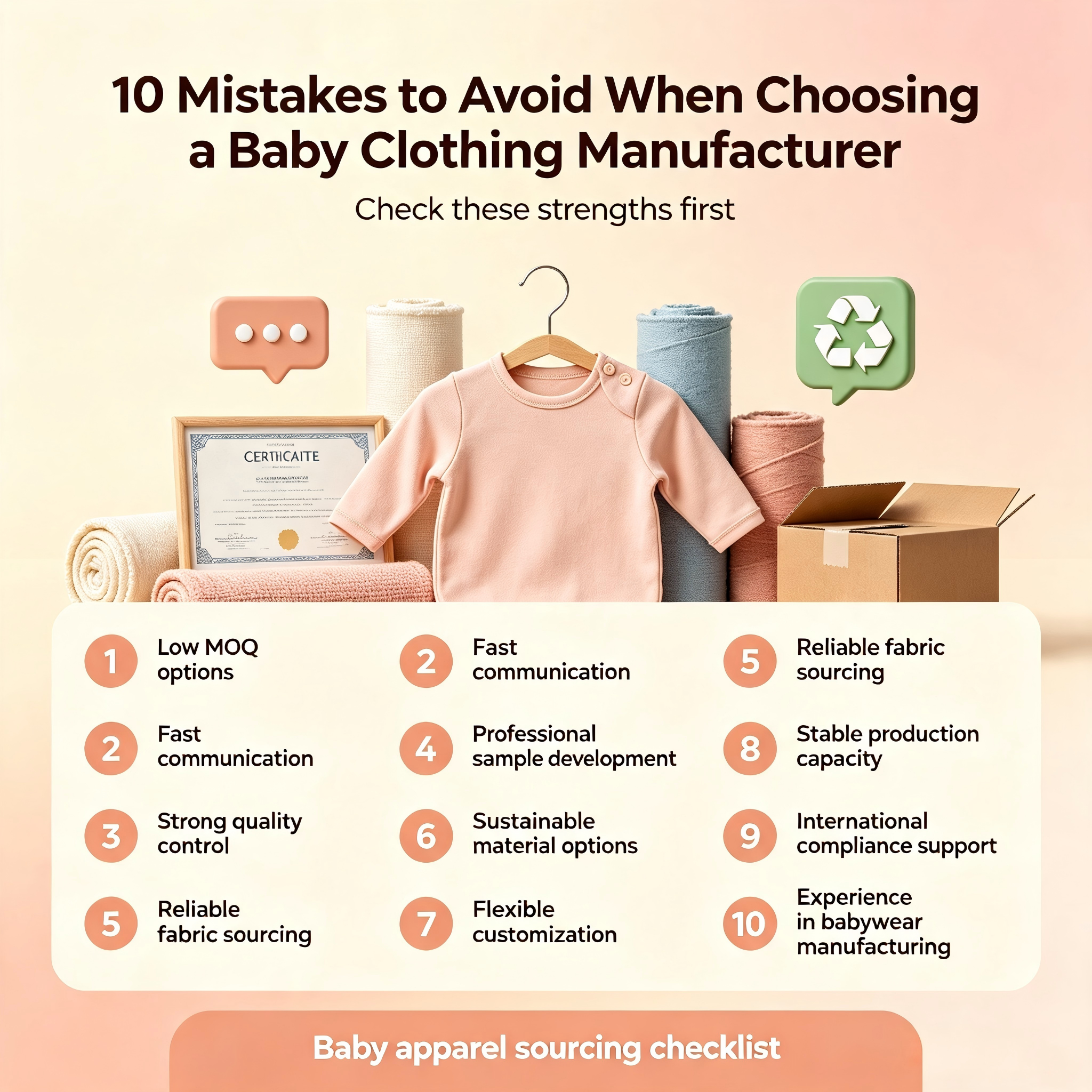
10 Mistakes to Avoid When Choosing a Baby Clothing Manufacturer
Finding the right baby clothing supplier is one of the most important decisions for any babywear brand. Whether you're launching a startup label or expanding an existing collection, your manufacturing partner directly affects product quality, delivery time, customer satisfaction, and long-term profitability.
Unfortunately, many brands focus only on price and overlook critical factors that can lead to production delays, inconsistent quality, or even failed product launches.
In this guide, we'll highlight the 10 most common mistakes buyers make when selecting a babywear manufacturer—and how to avoid them.
1. Choosing a Manufacturer with an MOQ That's Too High
Many factories require large minimum order quantities (MOQs), which can be risky for startups and boutique brands.
A high MOQ means:
Higher inventory costs
Greater financial risk
Limited flexibility for testing new designs
Look for a baby clothing supplier that offers low MOQs and supports small-batch production so you can validate products before scaling.
2. Ignoring Slow Communication
Fast communication is often a sign of a professional manufacturer.
If a supplier:
Takes days to reply
Misses your questions
Provides incomplete answers
Frequently changes information
you may experience even greater delays once production begins.
Choose a manufacturer with a responsive sales team and clear communication throughout the project.
3. Overlooking the Quality Control Process
A factory without a structured QC system increases the risk of defects, inconsistent sizing, and customer complaints.
Before placing an order, ask about:
Incoming material inspection
In-line production checks
Final product inspection
Needle detection (where applicable)
Packaging inspection
Reliable quality control is essential for babywear, where safety and consistency are critical.
4. Choosing a Manufacturer with Weak Sampling Ability
Samples reflect a factory's technical capabilities.
Poor samples often indicate future production problems, such as:
Incorrect sizing
Poor stitching
Inaccurate colors
Unbalanced patterns
Weak workmanship
An experienced manufacturer should provide accurate, production-ready samples within a reasonable timeframe.
5. Ignoring Fabric Sourcing Capabilities
Not every factory has access to high-quality babywear fabrics.
If your brand requires:
Organic Cotton
Bamboo Fabric
Ribbed Knit
French Terry
Sustainable Materials
OEKO-TEX® or GOTS-certified fabrics
make sure your manufacturer has reliable sourcing partners.
Strong fabric sourcing gives your brand more flexibility and better product quality.
6. Selecting Based Only on Price
The cheapest quotation rarely delivers the best value.
Extremely low prices may indicate:
Lower-quality fabrics
Reduced quality control
Less experienced workers
Inferior trims and accessories
Instead of choosing the lowest price, compare the total value, including quality, service, lead time, and consistency.
7. Failing to Verify Certifications
For baby clothing, certifications help demonstrate safety, sustainability, and compliance.
Depending on your market, ask whether the manufacturer can support:
OEKO-TEX® Standard 100
GOTS
BSCI
GRS
CPC compliance (for the U.S.)
A certified supply chain builds trust with retailers and consumers alike.
8. Not Checking Production Capacity
Can the factory grow with your business?
Ask questions such as:
Monthly production capacity
Number of production lines
Peak season lead times
Ability to handle repeat orders
A manufacturer that supports your long-term growth is more valuable than one that only meets your first order.
9. Ignoring Customization Capabilities
As your brand grows, you'll likely need more than basic production.
Look for manufacturers that offer:
Custom labels
Hang tags
Packaging
Embroidery
Printing
Fabric development
Pattern customization
Full-service OEM & ODM support saves time and simplifies supply chain management.
10. Choosing a Factory Without Industry Experience
Babywear has unique manufacturing requirements, including:
Safe trims and accessories
Comfortable fits
Strict quality standards
Child-safe construction
Frequent washing durability
A manufacturer specializing in baby clothing understands these details and can help prevent costly mistakes.
How to Choose the Right Baby Clothing Supplier
The ideal baby clothing supplier should provide more than manufacturing—they should become a long-term partner.
Look for a factory that offers:
Low MOQ options
Fast communication
Strong quality control
Professional sample development
Reliable fabric sourcing
Sustainable material options
Flexible customization
Stable production capacity
International compliance support
Experience in babywear manufacturing
Following these babywear manufacturer tips will help reduce sourcing risks and build a stronger, more reliable supply chain.
Build Your Babywear Brand with Maverlour
At Maverlour, we help brands create high-quality baby clothing with flexible OEM & ODM manufacturing solutions.
Our capabilities include:
Low MOQ for startup brands
Fast sample development
Organic Cotton & Bamboo Fabric Options
Custom Labels, Packaging & Branding
Sustainable Material Sourcing
Private Label Manufacturing
Strict Quality Control
Bulk Production & Global Export
Whether you're launching your first babywear collection or expanding an established brand, we're committed to helping you develop products that meet market expectations.
Ready to Find the Right Manufacturing Partner?
Contact Maverlour today to discuss your custom baby clothing project. From concept and fabric sourcing to sampling, production, and private labeling, we'll help bring your babywear ideas to life.
Table of Contents
- 10 Mistakes to Avoid When Choosing a Baby Clothing Manufacturer
- 1. Choosing a Manufacturer with an MOQ That's Too High
- 2. Ignoring Slow Communication
- 3. Overlooking the Quality Control Process
- 4. Choosing a Manufacturer with Weak Sampling Ability
- 5. Ignoring Fabric Sourcing Capabilities
- 6. Selecting Based Only on Price
- 7. Failing to Verify Certifications
- 8. Not Checking Production Capacity
- 9. Ignoring Customization Capabilities
- 10. Choosing a Factory Without Industry Experience
- How to Choose the Right Baby Clothing Supplier
- Build Your Babywear Brand with Maverlour
- Ready to Find the Right Manufacturing Partner?