
 EN
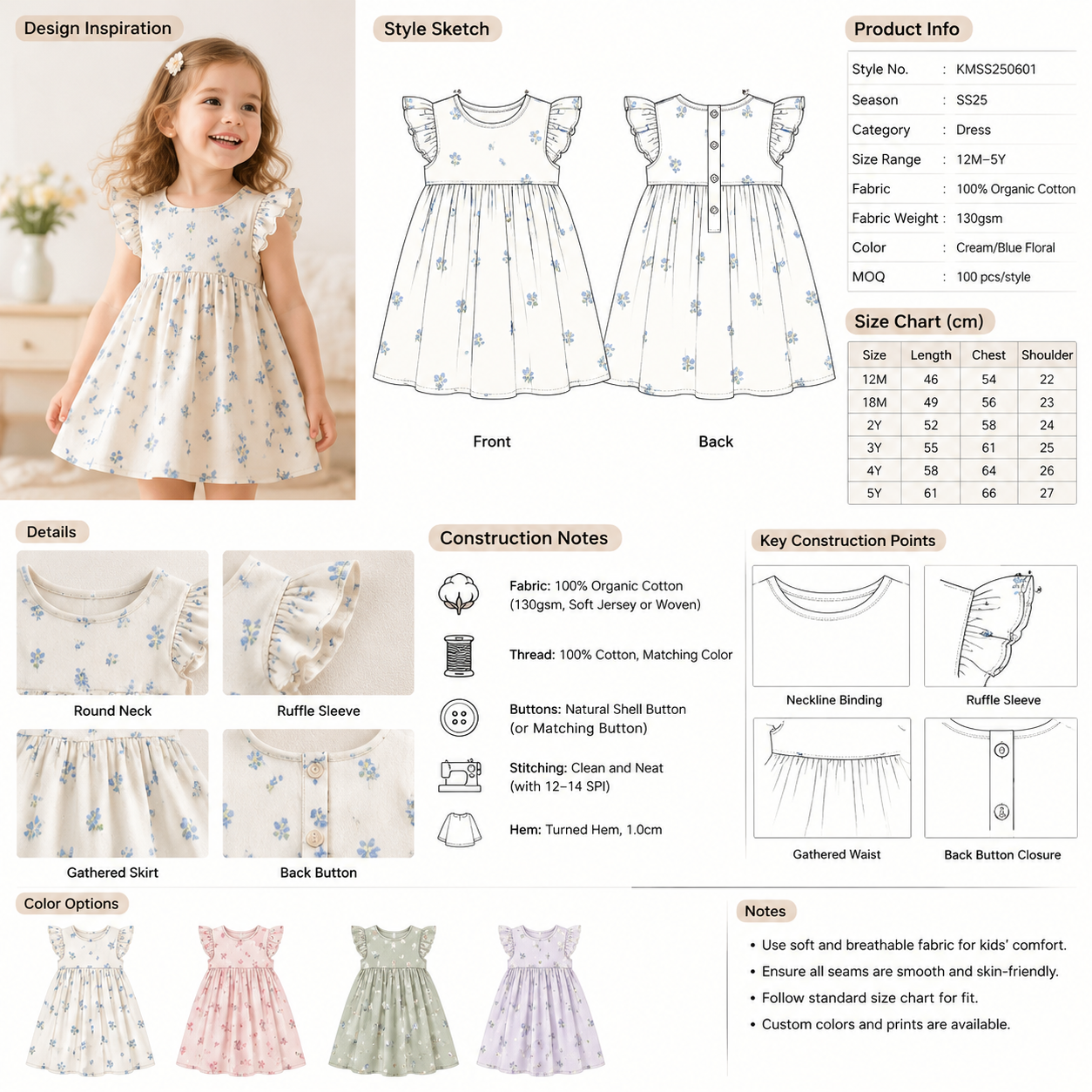
Before starting bulk production, every baby clothing collection needs a reliable sampling process. A well-developed sample helps brands check fabric quality, garment construction, sizing, fit, and overall appearance before committing to large production orders.
For startups, boutique brands, and established retailers, understanding baby clothing sample development is essential to reducing production risks and ensuring consistent product quality.
Whether you're developing baby rompers, bodysuits, pajamas, dresses, or matching sets, professional sampling turns your design ideas into physical products that are ready for evaluation.
In this guide, we'll explain the six key stages of custom babywear sampling, from preparing a technical package to approving the final sample.
Why Is Baby Clothing Sampling Important?
Sampling is more than simply making a miniature version of a finished product. It is a critical development stage that connects design, materials, pattern engineering, and manufacturing.
A professional sampling process helps brands:
Check whether the design matches the original concept.
Evaluate fabric softness, weight, and quality.
Confirm garment measurements and fit.
Identify construction and workmanship issues.
Test printing, embroidery, and other customization details.
Reduce mistakes before bulk production.
For babywear, these steps are particularly important because comfort, sizing consistency, fabric selection, and garment safety all influence the final product.
Step 1: Tech Pack Preparation
The first step in baby clothing sample development is preparing a detailed Tech Pack.
A Tech Pack is the technical blueprint that tells the manufacturer exactly how a garment should be developed.
A complete Tech Pack typically includes:
Technical sketches (front, back, and details).
Measurement specifications and size charts.
Fabric composition and weight.
Color references and Pantone codes.
Stitching and construction details.
Logo placement and artwork.
Label and packaging requirements.
Buttons, zippers, snaps, and other accessories.
Why does it matter?
Without clear technical instructions, different interpretations can lead to incorrect measurements, fabric selection, or construction details.
If you don't have a complete Tech Pack, an experienced OEM/ODM manufacturer can also help develop your product based on reference images, sketches, or physical samples.
Step 2: Fabric Selection
Fabric selection directly affects the comfort, appearance, durability, and retail positioning of baby clothing.
During this stage, the manufacturer helps identify materials that match the design concept and target market.
Popular fabric options for babywear include:
Organic Cotton: Soft, breathable, and suitable for everyday essentials.
Bamboo Viscose: Smooth and soft, often used for premium babywear.
Cotton Rib: Stretchy and comfortable, ideal for bodysuits and rompers.
French Terry: Suitable for sweatshirts, joggers, and baby sets.
Cotton-Linen Blends: Lightweight with a natural texture.
Recycled Polyester: Useful for selected outerwear and sustainable product concepts.
Important factors to evaluate include:
Fabric composition.
Fabric weight (GSM).
Hand feel and stretch.
Color consistency.
Shrinkage and colorfastness.
Relevant testing and certification requirements.
Choosing the right fabric at the beginning can prevent unnecessary revisions later.
Step 3: Pattern Making
Once the fabric and design are confirmed, the next step is pattern making.
Pattern making translates the technical design into individual fabric pieces that can be assembled into a garment.
For baby clothing, pattern development needs to consider:
Age and size specifications.
Body proportions.
Ease of movement.
Neckline and sleeve construction.
Seam allowances.
Comfort and garment functionality.
For example, a newborn bodysuit requires different proportions and opening details from a toddler sweatshirt.
Experienced pattern makers also consider fabric characteristics. Stretch fabrics and woven fabrics require different pattern construction approaches.
Accurate patterns provide the foundation for consistent samples and future bulk production.
Step 4: Sample Sewing
With the fabric and pattern ready, the first physical sample can be produced.
This stage transforms individual fabric panels into a complete garment.
The sample sewing process may involve:
Fabric cutting.
Panel assembly.
Overlock stitching.
Coverstitch or flatlock finishing.
Snap and button attachment.
Embroidery or printing.
Label application.
Initial workmanship inspection.
During this stage, the manufacturer checks whether the actual garment reflects the original design.
For example, a ribbed baby romper should maintain its intended stretch, neckline shape, and overall silhouette.
The first sample is usually a development version, so some adjustments may still be required.
Step 5: Fit Adjustment and Sample Revision
After the first sample is completed, it needs to be evaluated against the Tech Pack and design requirements.
This is one of the most important stages of custom babywear sampling.
Typical adjustments include:
Measurement Adjustments
Body length.
Chest and waist width.
Sleeve length.
Leg opening.
Neck opening.
Design Adjustments
Collar shape.
Pocket position.
Sleeve silhouette.
Button or snap placement.
Decorative details.
Workmanship Adjustments
Stitch density.
Seam finishing.
Fabric tension.
Printing and embroidery quality.
If the first sample does not meet expectations, the manufacturer revises the pattern or construction and produces another sample.
Depending on the complexity of the garment, multiple sample rounds may be necessary.
The goal is to achieve the right balance between design accuracy, comfort, quality, and production feasibility.
Step 6: Final Sample Approval
Once all requested adjustments are completed, the revised sample is submitted for final approval.
Before approving the sample, brands should check:
Design accuracy.
Fabric composition and hand feel.
Color matching.
Measurement specifications.
Stitching and workmanship.
Label and logo placement.
Trims and accessories.
Packaging details.
For more demanding projects, additional testing may be needed based on the product type and target market.
Important tip: Keep an approved reference sample and a confirmed Tech Pack for bulk production. They provide a clear standard for the production team and quality inspectors.
Once the final sample is approved, the project can move into bulk production planning.
Baby Clothing Sampling Process: At a Glance
| Development Stage | Main Activities | Expected Result |
|---|---|---|
| Tech Pack | Design and specifications | Clear product requirements |
| Fabric Selection | Material sourcing and evaluation | Confirmed fabric |
| Pattern Making | Pattern development and grading | Production-ready pattern |
| Sample Sewing | Cutting and garment assembly | First physical sample |
| Fit Adjustment | Measurement and workmanship revisions | Revised sample |
| Final Approval | Complete sample evaluation | Approved production reference |
How Long Does Baby Clothing Sampling Take?
Sampling time depends on design complexity, fabric availability, customization requirements, and the number of revisions.
As a general planning reference:
Simple babywear styles may take around 3–7 days for initial sampling.
More complicated designs may require additional development time.
Fabric sourcing and special trims can extend the schedule.
Additional revisions require extra time.
Working with a manufacturer that has experienced pattern makers, efficient sample sewing teams, and reliable fabric sourcing can make the development process more efficient.
How to Make Your Babywear Sampling Process More Efficient
If you want to reduce development time and avoid unnecessary sample revisions, consider these practical tips:
1. Prepare Clear Design References
Provide sketches, reference photos, measurement charts, and construction details whenever possible.
2. Confirm Fabric Before Sampling
Avoid changing the main fabric after sample development unless necessary.
3. Communicate Feedback Clearly
Instead of saying that a garment feels too loose, specify which measurement needs adjustment.
4. Consolidate Revision Comments
Collect all feedback into one document to reduce repeated communication.
5. Work with an Experienced Babywear Manufacturer
A manufacturer with professional sampling capabilities can identify potential construction problems early and suggest practical improvements.
Develop Your Custom Babywear Collection with Maverlour
At Maverlour, we understand that successful baby clothing manufacturing starts with accurate product development.
We support brands, wholesalers, and retailers through professional OEM and ODM services, helping transform initial concepts into production-ready babywear.
Our development capabilities include:
Tech Pack Evaluation and Design Development.
Custom Fabric Sourcing.
Organic Cotton and Bamboo Fabric Options.
Pattern Making and Size Development.
Professional Sample Sewing.
Fit Adjustment and Sample Revision.
Woven Labels, Hang Tags, and Logo Customization.
Bulk Production and Quality Control.
Whether you're launching a new babywear brand or expanding an existing collection, our team can support your project from the first design concept to final sample approval.
Ready to Develop Your Next Babywear Collection?
Send us your design sketches, Tech Pack, or reference images. Our team will help evaluate your requirements and provide a customized sampling and manufacturing solution.
Contact Maverlour today and turn your babywear ideas into production-ready products.
Table of Contents
- Why Is Baby Clothing Sampling Important?
- Step 1: Tech Pack Preparation
- Step 2: Fabric Selection
- Step 3: Pattern Making
- Step 4: Sample Sewing
- Step 5: Fit Adjustment and Sample Revision
- Step 6: Final Sample Approval
- Baby Clothing Sampling Process: At a Glance
- How Long Does Baby Clothing Sampling Take?
- How to Make Your Babywear Sampling Process More Efficient
- Develop Your Custom Babywear Collection with Maverlour