
 EN
EN
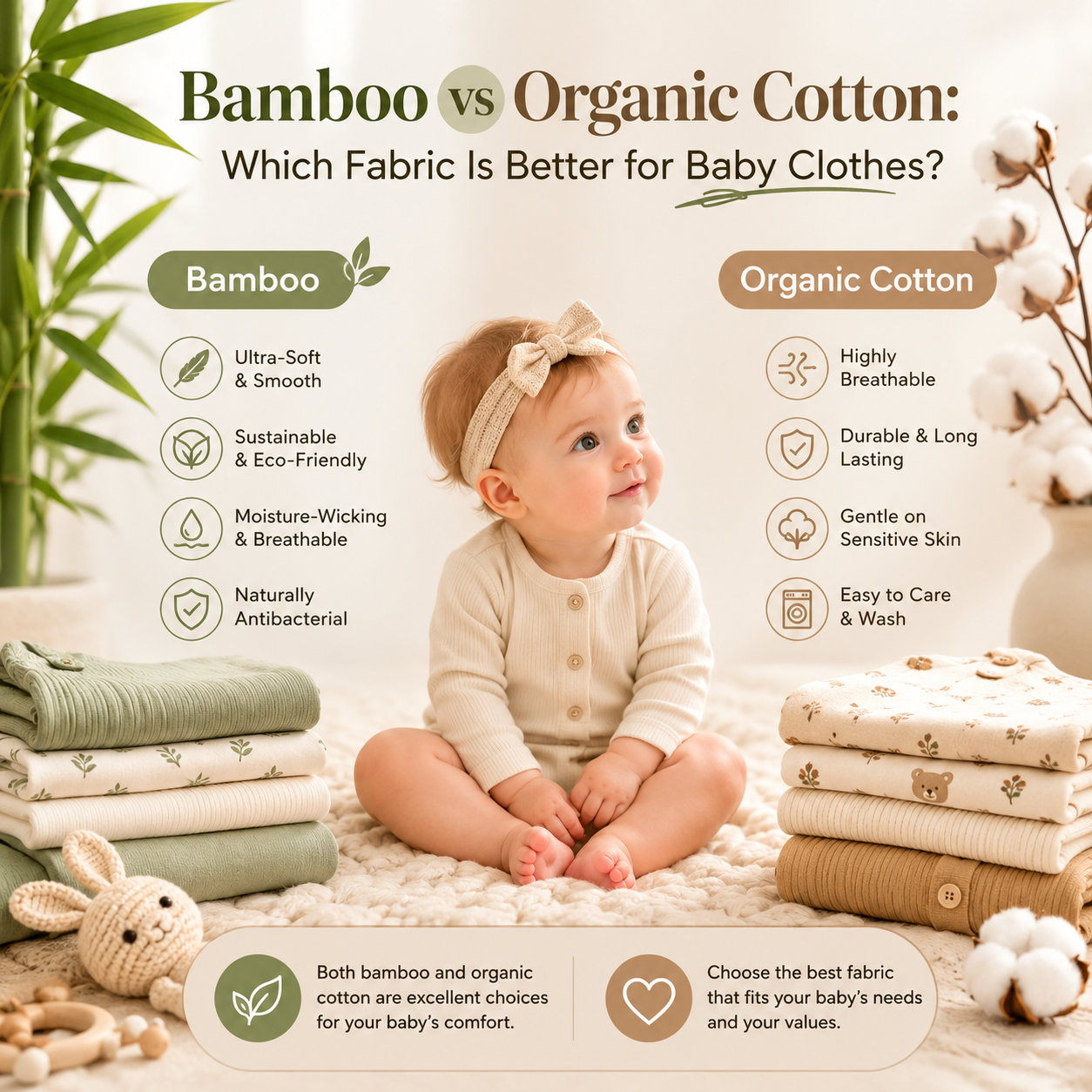
When it comes to choosing the best fabric for babies, parents and baby clothing brands often face the same question: Should you choose bamboo baby clothing or organic cotton baby clothes?
Both fabrics are popular choices in the babywear industry because they are soft, comfortable, and considered more sustainable than conventional textiles. However, each material has unique advantages that make it suitable for different products and market positions.
In this guide, we'll compare bamboo and organic cotton from the perspectives of softness, sustainability, cost, breathability, durability, and shrinkage to help you determine the best fabric for babies and your brand's collection.
Why Fabric Choice Matters for Baby Clothing
A baby's skin is thinner and more sensitive than an adult's, making fabric selection one of the most important decisions in babywear design.
The ideal baby clothing fabric should offer:
- Exceptional softness
- Breathability and comfort
- Skin-friendly properties
- Durability for frequent washing
- Sustainable sourcing
- Cost-effective production
Let's explore how bamboo and organic cotton compare.
Bamboo Baby Clothing: Benefits and Considerations
1. Superior Softness
One of the biggest selling points of bamboo baby clothing is its luxurious softness.
Bamboo fabric is often compared to silk or cashmere because of its smooth texture. This ultra-soft feel makes bamboo garments especially popular for:
- Baby rompers
- Sleepwear
- Swaddles
- Baby blankets
- Newborn essentials
For brands targeting premium babywear markets, bamboo can create a strong value proposition.
2. Sustainability
Bamboo is widely recognized as a renewable resource because bamboo plants grow rapidly and require less water than conventional cotton.
Key sustainability advantages include:
- Fast-growing crop
- Reduced water consumption
- No need for replanting after harvest
- Lower land usage compared with many traditional fibers
As consumer demand for eco-friendly baby clothing continues to rise, bamboo fabrics can support a sustainable brand story.
3. Cost
While bamboo offers premium comfort, it typically comes at a higher cost than organic cotton.
Factors affecting bamboo fabric pricing include:
- Raw material sourcing
- Fiber processing methods
- Specialized manufacturing requirements
As a result, bamboo baby clothing is often positioned as a premium product category with higher retail prices.
Pros of Bamboo Baby Clothing
✓ Extremely soft and smooth
✓ Luxurious hand feel
✓ Sustainable raw material source
✓ Premium brand positioning
Potential Drawbacks
✓ Higher fabric costs
✓ Longer sourcing lead times in some markets
✓ May require special care depending on fabric blend
Organic Cotton Baby Clothes: Benefits and Considerations
1. Excellent Breathability
Organic cotton baby clothes are known for their natural breathability.
Cotton fibers allow air circulation, helping regulate a baby's body temperature throughout the day and night.
This makes organic cotton ideal for:
- Everyday baby clothing
- Bodysuits
- T-shirts
- Summer collections
- Layering garments
For many parents, breathability is one of the most important factors when selecting the best fabric for babies.
2. Durability
Organic cotton is highly durable and capable of withstanding repeated washing cycles.
Since baby garments require frequent laundering, durability becomes a critical factor for both consumers and brands.
Benefits include:
- Strong fiber structure
- Long product lifespan
- Better resistance to wear and tear
- Consistent appearance after washing
For wholesale buyers and private-label brands, durability often translates into fewer customer complaints and stronger product reviews.
3. Shrinkage
Shrinkage is an important consideration in babywear manufacturing.
Organic cotton fabrics can experience some shrinkage after washing if not properly pre-treated.
However, experienced manufacturers typically apply:
- Pre-shrinking processes
- Fabric washing treatments
- Quality control testing
These measures help maintain garment sizing consistency and reduce shrinkage risks.
Pros of Organic Cotton Baby Clothes
✓ Highly breathable
✓ Durable for everyday use
✓ Trusted by parents worldwide
✓ Widely available supply chain
✓ Competitive production costs
Potential Drawbacks
✓ Slightly less silky than bamboo
✓ Possible shrinkage without proper finishing
✓ Premium organic cotton may cost more than conventional cotton
Bamboo vs Organic Cotton: Side-by-Side Comparison
| Factor | Bamboo Baby Clothing | Organic Cotton Baby Clothes |
|---|---|---|
| Softness | Excellent | Very Good |
| Breathability | Good | Excellent |
| Durability | Good | Excellent |
| Sustainability | Excellent | Excellent |
| Cost | Higher | More Affordable |
| Shrinkage Risk | Low to Moderate | Moderate (without pre-treatment) |
| Premium Positioning | Strong | Strong |
Which Is the Best Fabric for Babies?
The answer depends on your goals.
Choose Bamboo Baby Clothing If:
- You target premium babywear customers
- Softness is your top priority
- You want a luxury brand image
- You focus on sleepwear and newborn products
Choose Organic Cotton Baby Clothes If:
- You need breathable everyday essentials
- Durability is important
- You want broader market appeal
- You require more competitive production costs
Many successful baby brands actually combine both fabrics in their collections to serve different customer needs and price points.
Develop Your Own Baby Clothing Collection
Whether you choose bamboo baby clothing, organic cotton baby clothes, or a blend of both, selecting the right manufacturing partner is essential for product success.
At Maverlour, we help babywear brands create custom collections through:
- OEM & ODM baby clothing manufacturing
- Bamboo fabric sourcing
- Organic cotton babywear development
- Private label customization
- Low MOQ production
- Custom packaging and branding
- Sample development and bulk production
From startup baby brands to established retailers, our team can help turn your ideas into market-ready baby clothing products.
Ready to Create Your Custom Babywear Collection?
Contact Maverlour today to discuss your bamboo baby clothing or organic cotton baby clothes project and receive a customized development solution for your brand.